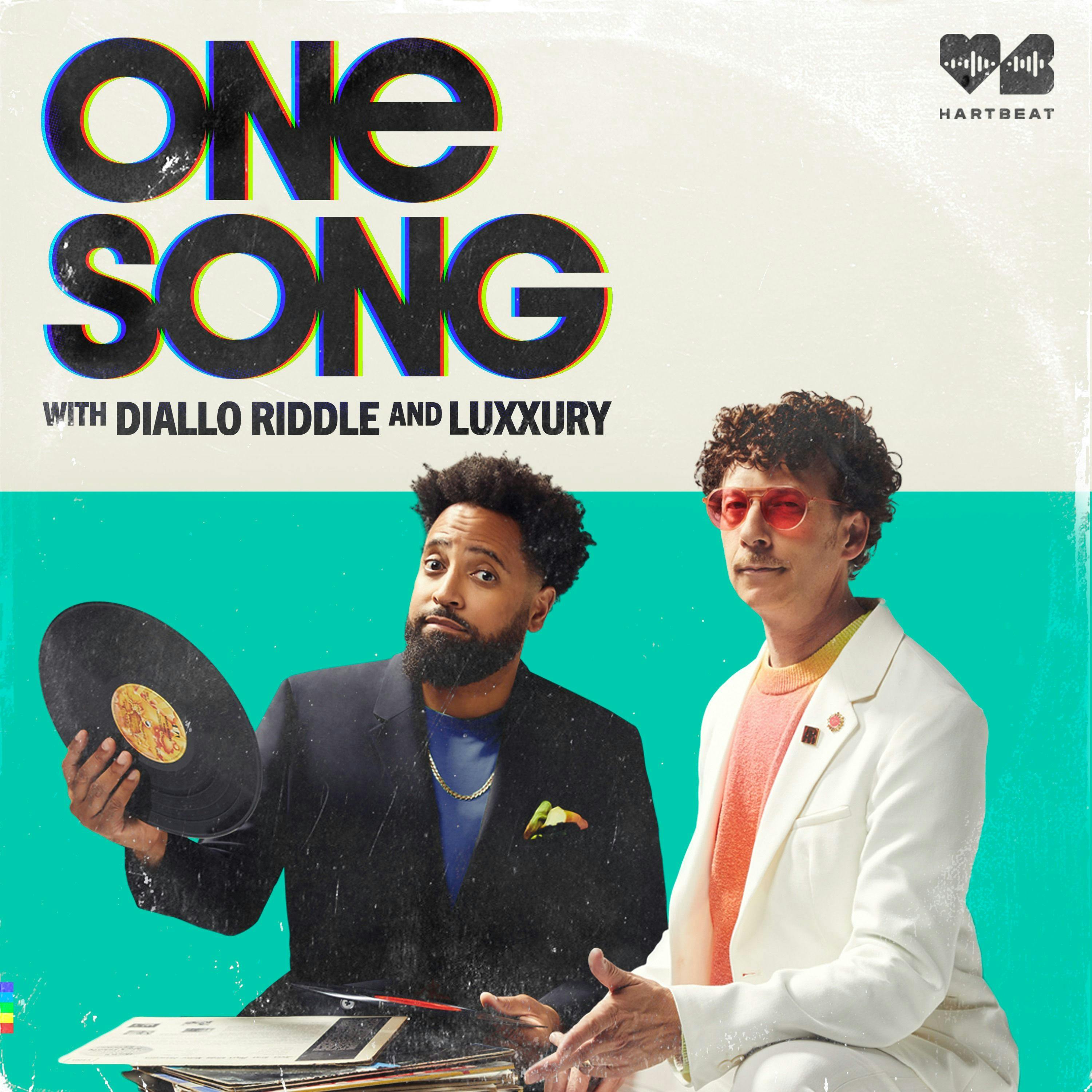
On each episode of ONE SONG, friends Diallo Riddle (Emmy-nominated star and creator of HBO Max’s 'South Side' and IFC’s 'Sherman’s Showcase') and Blake "LUXXURY" Robin (Music Producer & TikTok creator) will hilariously break down ONE SONG from the pop music canon that you know -…
The podcast explores Sister Nancy's 'Bom Bomb', tracing its roots in Jamaican musical reuse, the exploitation of its creator, and its eventual recognition as a sampled classic, highlighting the power dynamics of music royalties.
Songwriter Evan Bogart explains how Seeker Music buys catalogs to 'flip' into new hits, treats samples as 'another writer in the room,' and launches Music is Fun, a label built entirely on interpolations.
Hosts break down Massive Attack's "Teardrop": its Bristol sound-system roots, sparse drum-and-harpsichord construction, Elizabeth Fraser's vocal tied to Jeff Buckley's death, and the Madonna what-if.
The hosts trace industrial music from Throbbing Gristle to Trent Reznor, then break down how "Closer" was built from an Iggy Pop kick sample, a Roxy Music loop, and themes of obsession and self-loathing.
Music writer Stephen Hayden argues the Strokes never saved rock — weak choruses and lo-fi production limited them — and uses their arc to show the streaming era hollowing out the middle class of bands.
The Strokes revitalized rock with a retro-futuristic sound, but their artistic choices, like buried vocals and complex structures, limited their commercial reach while cementing their status as enduringly cool icons.
Michael Jackson’s "Thriller" redefined pop music through its cinematic production, intricate vocal layering, and groundbreaking music video. It transformed the industry by integrating MTV and establishing a lasting cultural association with…
Musician-comedian Kyle Gordon discusses his viral Graceland parody "Mr. Jombo" and the craft of blending comedy with music, explaining why he filmed on location in South Africa and Eswatini, how he balances parody with satire, and how his live show…
The podcast argues that Pete Rock & CL Smooth’s “T.R.O.Y.” is a definitive 90s hip‑hop track because it centers on family storytelling, a style they wish modern hip‑hop would revisit.
Sade's "Smooth Operator" is analyzed through its origins from the band Pride, innovative 1983 production techniques, and minimalist jazz-pop sound. The hosts explore Sade Adu's mysterious persona, the song's economical vocal melody, and her lasting cultural legacy.
A deep dive into Depeche Mode's "Enjoy the Silence" explores how producer Flood and Alan Wilder transformed Martin Gore's reluctant ballad demo into a global hit. The hosts analyze the song's minimalist production, iconic guitar melody, and existential lyrics, while tracing the band's evolution into international superstars through Anton Corbijn's
The origins of Depeche Mode are examined alongside their technical shift toward industrial sampling in West Berlin. The analysis highlights how the 1984 hit blended avant-garde noise with pop melodies to break into the US market. It explores the collaborative dynamics between songwriters and producers.
Geoff Barrow of Portishead debates whether breaking down music ruins its magic, arguing that demystifying production techniques strips away the opportunity for artists to find their own voice. The hosts counter that deconstructing songs lowers barriers to entry and demystifies genius. The conversation also covers Barrow's film scoring career, the u
This episode dissects Rihanna's "Umbrella," tracing its creation in an Atlanta studio where Tricky Stewart, The-Dream, and Kuk Harrell built the song in two hours from a GarageBand drum loop. The hosts analyze isolated stems—drums, synths, Jay-Z's verse, and Rihanna's dancehall-inflected vocals—while exploring the song's path through rejections by
A deep dive into Clyde Stubblefield's iconic drum break on James Brown's "Funky Drummer" and its massive influence on hip-hop, jungle, and drum and bass. Explores how Stubblefield received no royalties despite creating arguably the most sampled groove in music history, highlighting systemic unfairness toward session drummers.
A deep musical breakdown of James Brown's "Funky Drummer," tracing funk's etymology from jazz slang, Brown's evolution into a funk pioneer, and a stem-by-stem analysis of the 1969 recording session. The hosts highlight Brown's real-time orchestration style, the interplay between prepared parts and improvisation, and tease Part 2's focus on Clyde St
Jeff Barrow of Portishead debates whether breaking down music ruins it. He argues that musicians finding their own way and "getting it wrong" produces more interesting results than having sounds laid out on charts, which he likens to creating a photocopy. Barrow believes Portishead's sound emerged because the tools weren't readily available, and wo
A tribute episode analyzing Dolly Parton's iconic 1973 song "Jolene" with guest Andy Richter. The hosts dissect the song's musical elements, the legendary guitar lick Dolly played herself, her tumultuous relationship with Porter Wagoner, and how diverse artists like Beyoncé have reimagined this enduring country classic.
Comedian and musician Kyle Gordon discusses the craft of blending comedy with pop music, from filming his viral hit "Mr. Jumbo" in South Africa and Eswatini to designing live shows that balance humor with concert energy. He explores the structural tension between jokes and song formats, the importance of timing, and his place in the sparse traditio
A deep dive into Bob Marley and the Wailers' 1977 song "Jammin," exploring Marley's journey from rural Jamaica to global icon, the key producers and musicians who shaped his sound, and the political and spiritual context of Rastafarianism. The episode analyzes the song's musical architecture through isolated stems, revealing Carlton Barrett's stepp
This episode traces Ariana Grande's "7 Rings" back through its melodic origins in Rodgers and Hammerstein's "My Favorite Things," examining how the same Broadway melody evolved through John Coltrane's jazz interpretation into a trap-pop hit. The hosts analyze the production's contrast between waltz-time melody and 808 bass, discuss the publishing e
This analysis explores the creation of a definitive millennial anthem, examining its roots in jealousy and creative delusion. It breaks down the musical influences of mid-2000s indie rock and the technical elements that make a song universally singable.
Hosts break down The Jacksons' 1981 disco anthem "Can You Feel It," tracing the group's evolution from Motown to Epic Records and their absorption of Philadelphia soul. Through a detailed stem analysis, they uncover the song's White Rabbit-inspired bass line, its connection to Rihanna's "So Hard," and Universal Studios-style cinematic chord changes
A detailed musical breakdown of the Jackson 5's 1969 hit "I Want You Back," exploring its origins, the Corporation songwriting team, and the session musicians who shaped its sound. The hosts analyze each instrument layer—from Gene Pello's syncopated drums to Wilton Felder's jazz-influenced bass—while uncovering surprising facts like Ludy Washington
Two hosts explore Metallica's 'Master of Puppets,' discussing its riff-tape songwriting process and nine-section structure. They examine Cliff Burton's influence, themes of addiction and control, and punk roots. The conversation reflects on embracing youthful rage as adults.
Hosts Yolo and Blake explore The Pharcyde's 1995 track 'Runnin'' and its producer J Dilla, analyzing his revolutionary 'drunken' kick drum programming and the song's Brazilian Bossa Nova sample. The discussion covers the mid-90s East Coast-West Coast hip-hop rivalry and Dilla's lasting influence on producers from Questlove to Kanye West.
Actor Guillermo Diaz joins hosts to celebrate Madonna's 'Into the Groove,' sharing personal fandom stories including meeting Madonna on Ellen's show. The episode breaks down the song's lo-fi production, its role as a sexual liberation anthem, and its unjust B-side status that prevented US chart success.
The hosts analyze Gorillaz's hit as a genre blend enabled by early 2000s tech. They break down its stems and virtual mythology, contrasting upbeat sound with dark themes. Damon Albarn used sampling and animation to blur rock and hip-hop boundaries.
An analysis of Blur's "Song 2" reveals its origin as a sarcastic parody of American grunge. The track's massive success stemmed from its accidental genius, featuring a simple structure, a guide vocal take, and an intentionally "crappy" sound.
Don Was breaks down the B-52s' "Love Shack," from chaotic writing to church studio sessions. He reveals Cindy Wilson's tearful "tin roof rusted" take and why unplanned magic makes great records. They discuss 60s soul roots and equal band collaboration.
Guest Estelle joins a breakdown of Earth, Wind & Fire's "Let's Groove." Hosts analyze song stems, Afrocentric roots, and funk-disco fusion. They discuss intuitive creativity and joyful, spiritual music. Maurice White's leadership remains deeply influential.
Hosts analyze a party anthem's DNA, tracing Slick Rick and Bob James samples. They discuss West Coast drums, Phrygian basslines, and interpolation. Crowd sounds and hooks created an infectious, timeless hit.