 19:31
We Mapped the Invisible Universe. Something Doesn’t Add Up.
Watch
The video discusses new 3D maps of the universe's dark matter and how they may conflict with current theories of cosmic evolution, dark energy, and expansion.
Watch on YouTube PodPulse
Space Time explores the outer reaches of space, the craziness of astrophysics, the possibilities of sci-fi, and anything else you can think of beyond Planet Earth with our astrophysicist host: Matthew O’Dowd. For all business inquiries and sponsorship opportunities please reach…
19:31Watch
The video discusses new 3D maps of the universe's dark matter and how they may conflict with current theories of cosmic evolution, dark energy, and expansion.
Watch on YouTube 24:46
PBS Space Time examines how AI is being applied to mathematics and theoretical physics, from solving longstanding problems to designing experiments.
 1:58:16
Watch
A compilation episode exploring black holes, their formation, and the theoretical diagrams used to describe them, drawing from a decade of content.
Watch on YouTube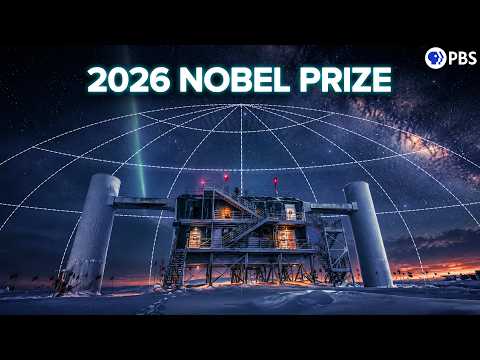 19:06
Watch
The video covers how IceCube detects neutrinos in Antarctic ice to trace cosmic rays, reveal hidden supermassive black holes, and advance neutrino astronomy.
Watch on YouTube 16:00
Watch
The video explores why the value -1/12 appears in physics, covering the Riemann zeta function, analytic continuation, the Casimir effect, and bosonic string theory.
Watch on YouTube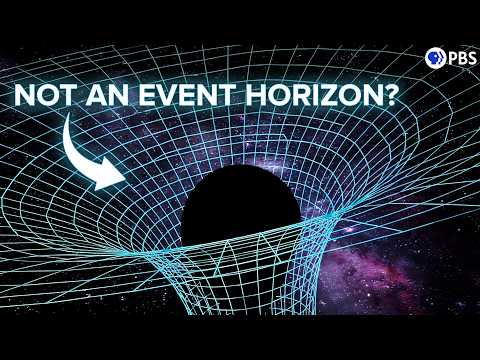 19:44
Watch
Black holes are defined by event horizons, which are global boundaries determined by the entire future of space-time. This teleological nature means horizons can form before a black hole fully collapses. Distinguishing between true and apparent horizons is essential for understanding causal structures.
Watch on YouTube 20:49
Watch
SETI is shifting from radio searches to identifying laser signals and technological anomalies. Advanced civilizations likely use targeted optical beams rather than broad radio waves. Modern surveys now use machine learning to find these signatures in massive datasets.
Watch on YouTube 16:53
Watch
Explores the history of physicists trying to avoid black hole singularities, from dark stars to white dwarfs to neutron stars. Introduces Planck stars from loop quantum gravity, where quantum spacetime effects halt collapse and create a white hole rebound frozen in time. Discusses 2024 updates on Planck relics and their potential role in dark matte
Watch on YouTube 20:20
Watch
JWST has discovered galaxies that appear too massive and evolved for the early universe, challenging models of galaxy formation. Possible explanations include a top-heavy Initial Mass Function and rapid quasar feedback shutting down star formation. Rather than overturning the Big Bang, this mystery likely reveals new physics about how early galaxie
Watch on YouTube 17:48
Watch
Earth's inner core may exist in a superionic state—simultaneously solid and liquid—where a rigid iron-nickel crystal lattice contains freely moving carbon atoms. Recent shock experiments validate simulations showing this exotic matter matches the puzzling seismic properties observed in our planet's deepest interior.
Watch on YouTube