 28:51
Scientists Just Announced There Could Be Life on Venus
Watch
Astrum explores recent Venus discoveries, including the possibility of life on the planet, atmospheric waves, volcanic activity, and future missions.
Watch on YouTube PodPulse
How big is the Solar System? What actually orbits our Sun? Why should I even be interested in space? On this channel, we'll answer these and a whole host of other questions. We will have a series dedicated to each of our planets and showcase beautiful images and videos captured…
28:51Watch
Astrum explores recent Venus discoveries, including the possibility of life on the planet, atmospheric waves, volcanic activity, and future missions.
Watch on YouTube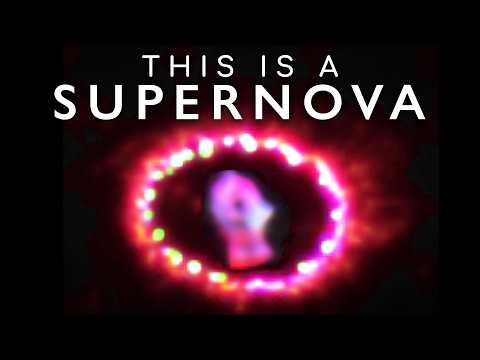 51:45
Watch
Astrum presents a remastered supercut covering supernovae, including Type I and Type II explosions, a live capture, the supernova trigger, near-Earth supernovae, and a possible link to mammoth extinction.
 31:25
Watch
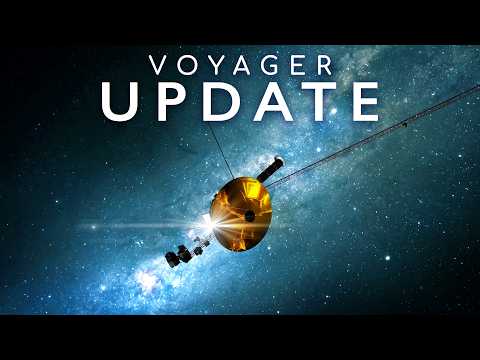
The video covers Voyager 1's milestone of reaching one light-day from Earth and what it has found beyond the edge of the Solar System.
Watch on YouTube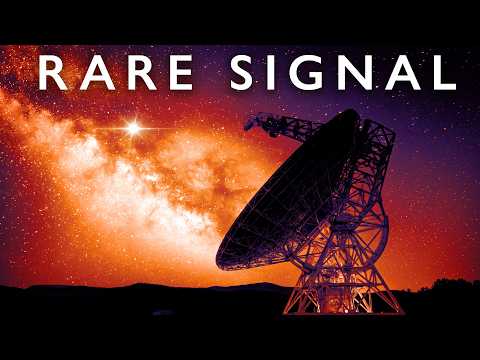 23:21
Watch
Astrum examines a disappearing signal detected near the galaxy’s center and whether it may be one of the missing pulsars.
Watch on YouTube 25:17
Watch
Astrum explores what lies beyond a black hole’s event horizon, including Kerr black holes, the Cauchy Horizon, spaghettification, and mass inflation.
Watch on YouTube 39:57
Watch
Astrum presents a supercut guide to Uranus, covering its sideways tilt, extreme cold, and possible ancient collision remnants.
Watch on YouTube 22:27
Watch
The video examines Euclid’s image of the Milky Way’s central bulge and what it may reveal about stars, planets, and hidden objects.
Watch on YouTube 44:49
Watch
The video explores a new hypothesis for a unified theory of everything, presented by the creator's brother Jon, covering topics like time dilation, dark energy, and the speed of light.
Watch on YouTube 24:52
Watch
The video examines Neptune's moon Triton, its young surface, active cryovolcanoes, and the possibility of a hidden ocean beneath its icy crust.
Watch on YouTube 27:25
Watch
Astrum explores how planets could form near supermassive black holes, what their surfaces may be like, and how scientists search for these “black hole planets.”
Watch on YouTube 1:27:42
Watch
Astrum presents a 4K-remastered supercut about the Milky Way, including its structure, strange discoveries, and mysterious features near the galactic centre.
Watch on YouTube 18:57
Watch
Tycho Crater is a massive lunar scar with a central peak and debris rays visible from Earth. Formed by a violent impact, it triggered landslides thousands of kilometers away and showered Earth with meteorites. Scientists continue to study its unique geology and debated age.
Watch on YouTube 26:11
Watch
Research suggests Sagittarius A* might be a dense dark matter core rather than a black hole. This model explains stellar orbits and galactic rotation while identifying dark matter's composition. Future observations of photon rings will eventually determine which theory is correct.
Watch on YouTube 26:29
Watch
An ancient interstellar comet, 3i Atlas, provided unprecedented data on distant star systems. Researchers detected X-rays and analyzed its 10-billion-year-old chemical composition. Its journey past Jupiter marks its final exit from our solar system.
Watch on YouTube 26:43
Watch
Space travel is evolving from inefficient chemical rockets to advanced nuclear engines and solar sails. These technologies aim to slash travel times to Mars. Innovative concepts like energy beaming could soon make interstellar journeys a reality.
Watch on YouTube 26:45
Watch
The Artemis II mission launched April 1, 2026, sending four astronauts on a 10-day lunar voyage that broke Apollo 13's distance record and demonstrated revolutionary laser communications, radiation biology experiments, and real-time observation of micrometeorite impacts. Despite helium leaks, toilet malfunctions, and spacesuit development delays, t
Watch on YouTube