 38:29
What Is the Deepest Number in Mathematics?
Watch
The video explores which of π, e, √2, or the golden ratio is the deepest number in mathematics, using continued fractions and the Fibonacci sequence.
Watch on YouTube PodPulse

Physics Explained is a channel that explores advanced topics in physics without skimping on the mathematical detail. There is a growing community of independent learners who are keen to explore modern ideas in physics with the aid of mathematical reasoning. This channel aims to…
38:29Watch
The video explores which of π, e, √2, or the golden ratio is the deepest number in mathematics, using continued fractions and the Fibonacci sequence.
Watch on YouTube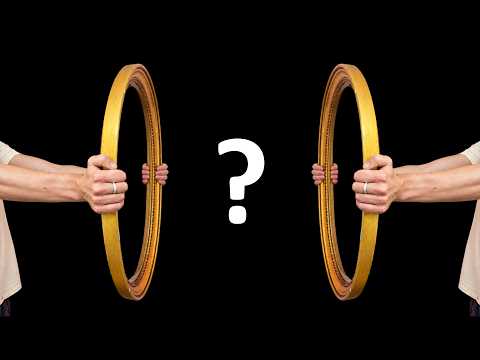 51:42
The video explores the Casimir effect, in which two mirrors in a perfect vacuum attract each other due to quantum field theory, as first predicted by Hendrik Casimir in 1948.
 40:43
Watch
The video examines special relativity, the twin paradox, and why the straight inertial path through flat spacetime permits the greatest proper time.
Watch on YouTube 41:58
Watch
The video covers a step-by-step derivation of the Navier–Stokes equation, applying Newton’s second law to a fluid parcel in three dimensions.
Watch on YouTube 41:30
Watch
Electromagnetism's unification from Ørsted's discovery to Maxwell's displacement current shows changing fields create circulating fields. These sustain each other and predict electromagnetic waves. This reveals light as an electrodynamic phenomenon.
Watch on YouTube 36:30
Watch
The episode traces electric and magnetic fields from ancient Greece to Faraday. It covers Coulomb's law, field lines, and Gauss's law, contrasting them with magnetism's lack of monopoles. These form the first two laws of classical electromagnetism.
Watch on YouTube 57:25
Watch
Primes seem random, yet Gauss found their logarithmic thinning. Riemann showed zeta zeros encode exact prime distribution via oscillatory corrections. The Riemann Hypothesis posits these zeros lie on a critical line, controlling prime fluctuations.
Watch on YouTube 38:21
Watch
Newton unified Earth and sky through universal gravitation. Discrete calculations predict orbits from initial conditions alone. Kepler's ellipses emerge naturally, revealing physics' predictive power despite later Mercury discrepancies.
Watch on YouTube