Biochemist explaining longevity, biotech, CRISPR and more...!! So, hello and welcome to The Sheekey Science Show! My name is Eleanor and I graduated in Biochemistry from the University of Cambridge (2019). I am now doing a PhD at the Cancer Research UK - Cambridge Institute. (p5…
Dr Florence Comite discusses five biomarkers for ageing, optimal ranges, women's testosterone, thyroid testing, and GLP-1/GIP drugs including recent Alzheimer's trial results.
Dr Jesse Poganik discusses biological-age measurement, temporary stress-related aging, and a preprint on transplanted hearts taking on a recipient's biological age.
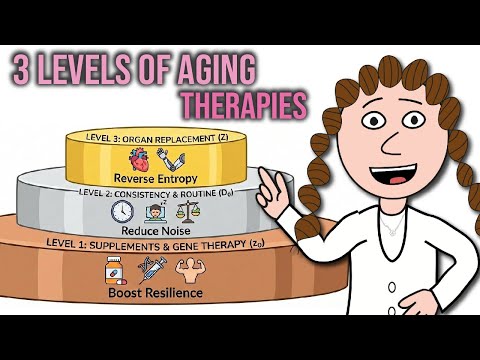
Aging may involve stress, noise, and damage. Current drugs target stress for small gains, but reducing noise could add decades. Mice age unstably unlike humans. Future research should target noise and damage over stress.
A minimal model defines aging via three variables: entropic damage, stress response, and noise. Current therapies mostly target reversible stress, aiding healthspan but not maximum lifespan. Lifespan extension requires reversing irreversible damage.
Longevity advances included expanded aging hallmarks and partial reprogramming. Senescent cell clearance via CAR T cells and ultrasound showed promise, and plasma exchange reduced age. AI-designed antibodies may revolutionize therapeutics.
Shay Joseph Osakitan discusses the Public Longevity Group's mission to build public trust in longevity science through cultural intelligence and data-driven communication. PLG uses internet scraping, media analysis, and surveys to map how different demographics perceive longevity, revealing that interest clusters in wealthier, educated, liberal reg
Retro's AI lead explains engineering Yamanaka factor variants achieving 50x cellular reprogramming efficiency via OpenAI collaboration. Topics include protein design methodology, wet lab bottlenecks, safety validation, and the mission to extend healthy human lifespan through rejuvenation therapies.


 54:14