1:06:56
Brilliant Pebbles: Shooting a Ballistic Missile with a Hypervelocity Bullet
WatchAlexander the ok
A video on the Brilliant Pebbles concept for intercepting ballistic missiles with hypervelocity projectiles.
Watch on YouTube PodPulse
Curated sources for Science explainers in Explainers & Documentary, with summaries of their latest episodes.
6 curated podcasts11 curated YouTube channels1 curated newsletter1:06:56WatchAlexander the ok
A video on the Brilliant Pebbles concept for intercepting ballistic missiles with hypervelocity projectiles.
Watch on YouTube 15:06
Also indexed: 42 YouTube channelsIndexed sources are summarized but not yet reviewed for Explore.
WatchSciShow
The video discusses how geologists attribute various features of Earth to a collision with a Mars-sized protoplanet called Theia around 4.5 billion years ago.
 10:29
WatchNOVA PBS Official
The video explores the prehistoric artwork of Chauvet Cave, featuring Paleolithic paintings created around 37,000 years ago.
Watch on YouTube 1:33:57
WatchNew Scientist
A livestream exploring whether AI could become conscious, featuring mathematicians, physicists and philosophers discussing the nature of consciousness and machine intelligence.
Watch on YouTube 11:48
WatchWIRED
Ben Stiller and Robert De Niro answer the web's most searched questions about themselves in a WIRED Autocomplete Interview.
Watch on YouTube 8:06
WatchScience Magazine
Paleontologist Narimane Chatar explains how the evolutionary trade-off between slicing and crushing teeth has favored specialists over generalists in mammals.
Watch on YouTubeScience explainersHistory of science & technology
Engineer turned data scientist. I make videos about things that generally interest me. I do not use any generative AI to make any part of my videos. I use the following tools for video creation: OS: Linux Mint Editing: DaVinci Resolve Animation: Blender Audio: Audacity Image edi…
1:06:56Watch
A video on the Brilliant Pebbles concept for intercepting ballistic missiles with hypervelocity projectiles.
Watch on YouTube 1:14:56
Watch
A video essay about the game System Shock, covering its background, design, and influence on later games.
Watch on YouTubeSciShow explores the unexpected. We delve into the scientific subjects that defy our expectations and make us even more curious! For more from SciShow, check out SciShow Kids and SciShow Tangents, along with SciShow Space and Psych.
Blowing your mind since 1974. NOVA is the most-watched primetime science series on television reaching an average of five million viewers weekly. The NOVA website has been pioneering new forms of web-original content since it debuted in early 1996. NOVA's online presence amplifi…
If someone in the world has a good idea, you'll find it here. We're the world's number one science and technology magazine, and online we are the go-to site for breaking news, exclusive content and breakthroughs that will change your world. New Scientist: exploring the fruits of…
The latest videos from Science magazine, the world's leading outlet for scientific news, commentary, and cutting-edge research. Learn more at www.science.org.
TED-Ed’s mission is to create lessons worth sharing. Feed and expand your curiosity with our award-winning animated shorts - published on YouTube and available with supplemental learning materials on ed.ted.com. Want to suggest an idea for a TED-Ed animation, nominate an educato…
We give you deep answers to simple questions about science and the rest of the universe. And also dad jokes. Be Smart is hosted by Joe Hanson, PhD. He's a molecular biologist and an award-winning science communicator and journalist Have ideas or questions? Visit our website to g…
Animation videos explaining things with optimistic nihilism since 12,013. We’re a team of illustrators, animators, number crunchers and one dog who aim to spark curiosity about science and the world we live in. To us nothing is boring if you tell a good story. For updates on our…
 6:31
Watch
Nessa Carey discusses how early career scientists can approach conference networking as a practiced professional skill.
No recent summaries yet.
The video discusses how geologists attribute various features of Earth to a collision with a Mars-sized protoplanet called Theia around 4.5 billion years ago.
 14:44
Watch
SciShow examines whether historical figures like Da Vinci and Dalí really slept only 2 hours a day in six 20-minute naps, and what science says about such sleep regimens.
Watch on YouTubeThe video explores the prehistoric artwork of Chauvet Cave, featuring Paleolithic paintings created around 37,000 years ago.
 6:13
Watch
The video explores the butterfly effect thought experiment and how tiny changes in physics can lead to massive, unpredictable consequences.
Watch on YouTubeA livestream exploring whether AI could become conscious, featuring mathematicians, physicists and philosophers discussing the nature of consciousness and machine intelligence.
 1:00:58
Watch
Experimental particle physicist Harry Cliff discusses the Standard Model of particle physics, its limitations, and the search for new physics beyond it.
Watch on YouTubeBen Stiller and Robert De Niro answer the web's most searched questions about themselves in a WIRED Autocomplete Interview.
 30:41
Watch
Food historian Ken Albala joins WIRED to answer internet questions about the history of food, covering myths, recipes, and culinary traditions.
Watch on YouTubePaleontologist Narimane Chatar explains how the evolutionary trade-off between slicing and crushing teeth has favored specialists over generalists in mammals.
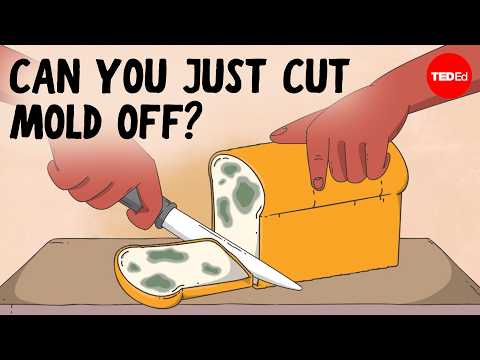
TED-Ed lesson by Josephine Wee exploring how mold spores form, the difference between harmful and helpful molds, and what happens if you eat moldy food.
 6:16
Watch
A look at five scientists who experimented on themselves, and how their bold self-experimentation led to breakthroughs in medicine.
Watch on YouTubeThe creator explores how lift works after flying with the U.S. Navy Blue Angels and building a wind tunnel to test common myths about flight.
 42:43
Watch
The video examines the environmental impact of AI, including electricity use, carbon emissions, water consumption, and the effects of data centers on local communities.
Watch on YouTubeThe video explains what happens to the body after death, focusing on surviving cells and a process that can continue for weeks.
 17:31
Watch
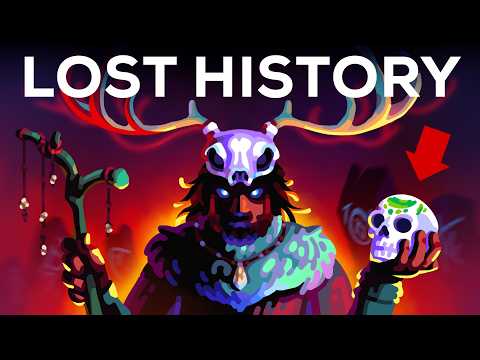
The video explores humanity’s first civilization using DNA sequencing, dating ancient detritus, mathematical models, and aerial and lidar archaeology.
Watch on YouTube 6:18
Watch
Caroline Dunne gives early career researchers advice on getting the most from conference networking sessions.
Watch on YouTube