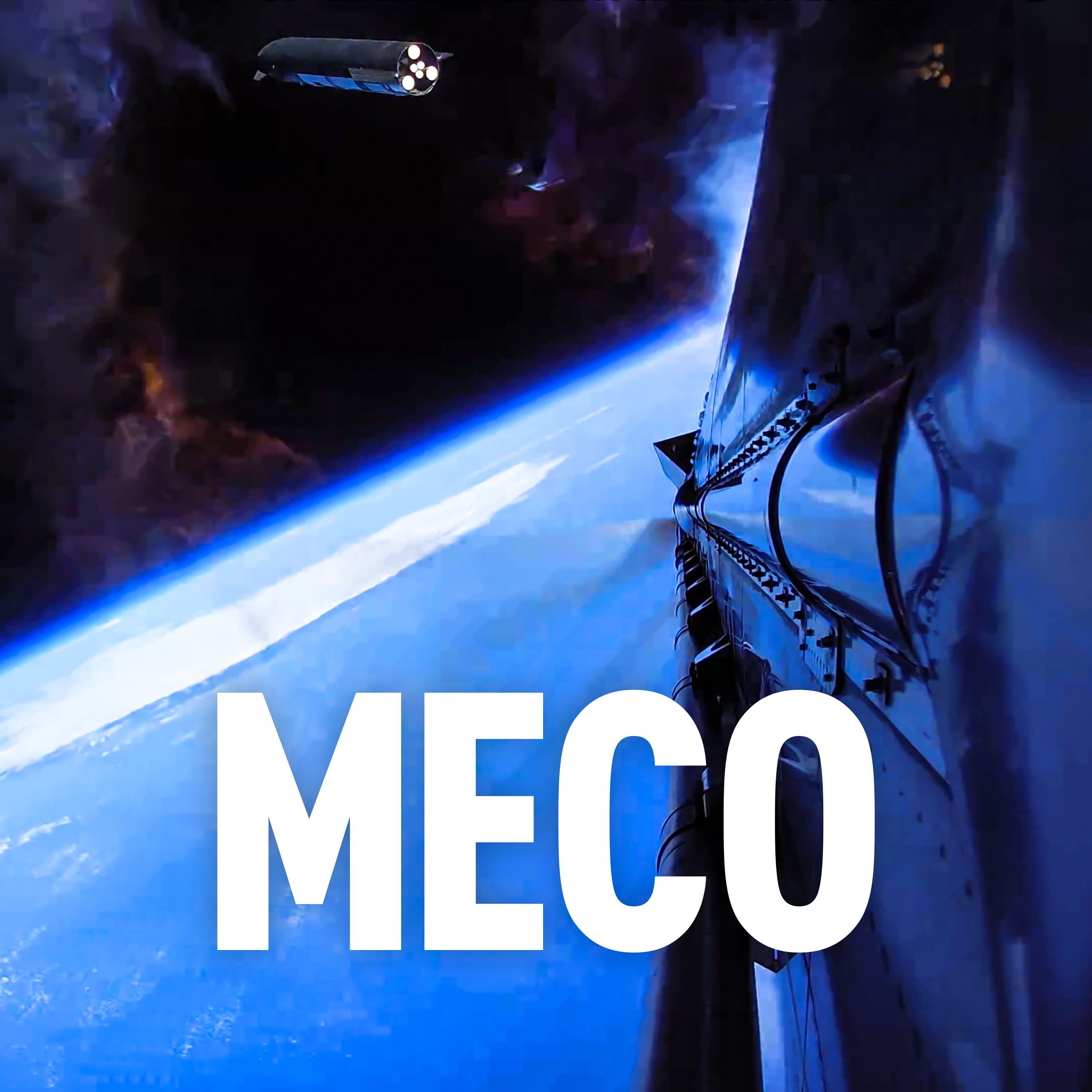
SpaceX's first Starship ship catch marks an inflection point, while Vulcan's booster failure and China's lunar timeline push NASA and the Space Force to rethink how they buy launch and lunar transport.
NASA's Artemis updates reveal divergent paths for lunar landing: Blue Origin's multi-stage approach versus SpaceX's high-frequency refueling model, while reinforcing the central role of the SLS in lunar architecture.
Anthony D'Angelo and Caleb Henry analyze the current launch shortage crisis, arguing SpaceX's pivot to internal Starlink/Starshield/Starmind payloads has eliminated price pressure on the industry and created demand for a new primary launcher.
Anthony Colangelo analyzes NASA's $360M Starliner contract modification, SpaceX's pivot away from Dragon post-2030, and the agency's contradictory stance on LEO versus lunar priorities. He argues NASA is trapped spending billions annually on a commercial space station market it publicly admits doesn't exist, while the real strategic demand signal h
Anthony Colangelo analyzes SpaceX's new Starbase Louisiana launch complex, highlighting its ideal sun-synchronous orbit trajectories, water-return corridors, and strategic fit for data center satellites and orbital propellant depots. He explores the broader transition as Falcon 9 winds down, Starship matures, and multiple new launch vehicles from S
Andrew Jones joins to discuss recent Chinese spaceflight milestones, including LandSpace's successful Zhuque-3 booster landing and the Long March 10B sea capture. The conversation covers the evolution of China's commercial space industry, the Long March 10 family variants, and the delayed Chang'e 7 lunar south pole mission. Jones explains the techn
Inversion Space builds ARC, a maneuverable orbital re-entry vehicle for rapid global cargo delivery. Using modern lifting bodies and guided parachutes, it targets military logistics and hypersonic testing. The company envisions thousands of units on orbit.
Analysis of Rocket Lab's $8 billion Iridium acquisition, positioning Rocket Lab as a self-launching space power with immediate subscribers and revenue. Discussion of Blue Origin's streamlined New Glenn pad rebuild using horizontal integration and 'breakover' processes. Review of NASA's four new CLPS lunar lander awards, seen as a block-buy strategy
A founder details their company's plan to replace a rocket's first stage with a ground-based linear accelerator. The strategy involves first commercializing the technology for defense applications to fund the long-term vision of space and lunar launch.
A former SpaceX leader breaks down the three cultural pillars of successful hard tech companies: optimizing information flow by bypassing hierarchy, ruthlessly focusing on core goals by 'letting fires burn,' and pushing systems to their breaking point to find true constraints.
New Glenn's explosion devastates Blue Origin's lunar plans and exposes fragile U.S. launch infrastructure. NASA's Artemis program now hinges on Starship for Moon missions. This tests whether NASA will diversify capabilities and build redundancy rather than accept delays.
Former NASA chief Jim Bridenstine discusses his new role as CEO of Quantum Space. He details the company's focus on building highly maneuverable spacecraft for national security, enabling "maneuver without regret" in orbits beyond LEO to counter new threats.
A discussion on the shift to high-power satellites and orbital data centers. It explores the engineering challenges of scaling in space and the business case for building on current launch tech while viewing future systems like Starship as volume enablers.