Peter Attia, MD, is the founder of Early Medical, a medical practice that applies the principles of Medicine 3.0 to patients with the goal of simultaneously lengthening their lifespan and increasing their healthspan. He is the host of The Drive, one of the most popular podcasts…
Peter Attia reviews the evidence on cold therapy, including cold water immersion, cryotherapy, and cold showers, and their effects on muscle recovery, mood, brown fat, hypertrophy, and longevity.
The video features Nav Chandel discussing mitochondrial biology, covering energy production, oxidative stress, aging, metformin, and various supplements and therapies.
An AMA episode explains what blood work can and cannot reveal about health, including how to interpret results over time and where other tests are needed.
Resistance training as we age: training intensity, exercise selection, injury-aware modifications, and muscle-by-muscle guidance for strength and hypertrophy.
Dr. Lisa Feldman Barrett discusses her theory of constructed emotion, the brain as a predictive system, and how individual variation challenges conventional views of emotion.
Peter Attia and Dr. Siddhartha Mukherjee examine cancer biology, prevention, early detection, treatment, and broader ideas about longevity and regeneration.
A sneak peek of AMA 90 in which Peter Attia revisits positions he has taken over more than eight years of his podcast, covering nutrition, longevity drugs, cancer screening, and exercise.
Endometriosis and adenomyosis cause chronic pain and infertility through hormonal resistance. Early diagnosis prevents central sensitization and disease progression. Maternal age dominates egg quality, making proactive fertility planning and timely treatment essential.
Brain cholesterol operates independently via APOE lipoproteins. The APOE4 genotype disrupts neuronal transport and promotes Alzheimer's pathology. Statins and emerging CETP inhibitors may support brain health by modulating cholesterol homeostasis without depriving the brain.
Analysis of seed oil processing focusing on hexane solvent extraction. Discusses why hexane is used, residual amounts in finished oils (under 1 ppm), hexane's toxicity profile (danger from inhalation, not ingestion), and the body's ability to clear it without bioaccumulation. Notes linoleic acid consumption has risen from 3% to 10% of food availabi
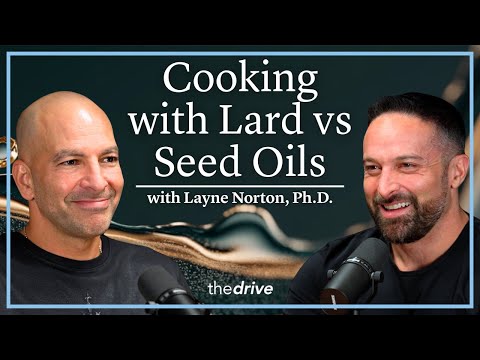
Two experts discuss seed oils, saturated fats, and cardiovascular health, exploring alternatives like olive oil and the oxidation risks of restaurant frying. They caution against food industry marketing tactics and emphasize the importance of evaluating converging scientific evidence rather than social media hot takes. Ultimately, they argue that b


 1:08:45