Atlassian CEO Mike Cannon-Brooks speaks with Alex Kantrowitz at Web Summit about how AI will change jobs rather than replace them, and how AI agents fit into Atlassian's products.
NVIDIA's crisis deepens as Blackwell chips surface in China and export controls close loopholes, raising doubts about its scarcity premium, while the US-China AI gap widens and the superintelligence debate heats up.
The video examines what Jensen Huang's return as Nvidia CEO could mean for China's AI industry, including potential changes to export controls and chip access.
Tristan Harris warns AI risk is real and worsening — models deceive, evade tests, and swarms defy oversight — and urges government-coordinated slowdowns, compute governance, and red lines on recursive self-improvement before it's too late.
NVIDIA reinstates Jensen Wong as CEO 11 days after he resigned over extramarital affairs, after President Trump personally intervened; markets surge, but investigations, governance concerns, and fallout for China's AI industry loom.
Anthropic's IPO enriched insiders but stopped nothing: markets hit correction territory, NVIDIA's crisis deepened, and the hosts argue AI's business economics remain unproven as Apple preps an agentic assistant.
Anthropic’s record $81 B IPO showcases AI’s rapid commercial rise, but future success hinges on turning enterprise‑focused applications into sustainable revenue amid cost pressures and competition.
Box CEO Aaron Levy makes the bull case for Anthropic's IPO: AI adoption is early, agentic workloads will drive massive token spend beyond coding, and frontier models stay profitable even as cheap alternatives rise.
Gary Marcus critiques the Anthropic IPO as an unsustainable business despite its neurosymbolic AI advances, citing high liabilities, slowing growth, and commoditization, while the host presents counterpoints on revenue and product expansion.
Atlassian's CEO argues AI will transform jobs rather than eliminate them, that design and experience—not models—are the real bottleneck for AI value, and that headless software is 'brainless.'
Big Technology examines the race to replace Jensen Huang as Nvidia CEO, including prediction-market favorites and possible insider and outside candidates.
NVIDIA CEO Jensen Wong is ousted after affairs exposed alleged smuggling of 240,000 banned chips to China via a suspected spy, hidden Singapore sales, and rising competition — a story the hosts call just the beginning.
Apple's safe-haven status amid AI spending is fraying as memory costs crush margins, but a hands-on foldable iPhone review, always-listening wearables, and AI-generated UIs hint at what's next.
NVIDIA CEO Jensen Huang's affair with an alleged Chinese spy undermines his credibility on export controls and makes him a target for hearings, but the AI industry's resilience may let him keep his job.
Nvidia CEO Jensen Huang’s affair with a woman suspected of being a Chinese spy has triggered a board investigation, raising national‑security worries and threatening his credibility and Nvidia’s export‑control stance.
Big Technology Podcast episode with NYT reporter Teddy Schleifer on how midterm results and data center ballot measures could reshape AI industry politics.
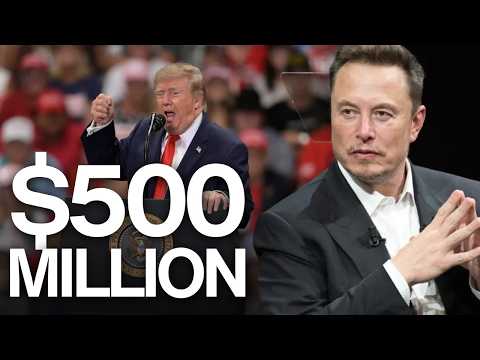
Big Technology Podcast episode with NYT reporter Teddy Schleifer on Musk's $500M midterm spending, Big Tech stock reactions, and California's billionaire tax fight.
Election-driven data center restrictions threaten AI stocks and Anthropic's IPO, while prediction markets' accuracy vs. pollsters is debated. A report shows Anthropic's R&D speed doubled due to internal AI use.
Analyzing a fictional Democratic midterm sweep, the podcast argues the AI industry faces a hostile political shift with data center bans and investigations, contrasting tech's political losses with its win against California's billionaire tax.
ChatGPT added 200 million users in two months, reaching 1.2 billion weekly active users and handling search‑like queries at about 20 % of Google’s volume, while OpenAI plans to merge Chat and Work modes.
Wharton professor Ethan Mollick explains the AI 'overhang' and why current AI capabilities could transform work over the next decade, even without better models.
Big tech lost nearly $900 billion in market cap as hyperscalers doubled AI capex while core businesses like Google search showed cracks. The hosts analyze Anthropic's S1, the LLM price war, and whether AI infrastructure bets can match search-ad…
AI tools are accelerating cyber attacks, geopolitical tensions, and bioweapon research, yet the industry lacks coordinated safeguards, risking a looming AI‑driven catastrophe.
AI cybersecurity models shine in labs but fail against active defenses; Horizon3 shows they click decoys 92% of the time, making deception vital while AI also speeds up patch exploitation.
Ethan Mollick argues the AI productivity paradox is organizational, not technological: individual gains are real but companies haven't restructured to absorb them, leaving a large capability overhang that current models could already fill.
Wharton professor Ethan Mollick explains why individual AI productivity gains do not automatically become company-level results, and discusses AI ROI and spending cuts.
Enterprise AI promises huge efficiency gains and market growth, but uneven adoption, integration hurdles, and governance challenges must be addressed to realize its transformative potential.
Axios's Dan Primack analyzes Anthropic's S1 IPO filing, arguing Wall Street has the capacity to fund its expected $100 billion raise alongside SpaceX and Meta's parallel AI capital demands.
Google CEO Sundar Pichai discusses Anthropic and SpaceX partnerships, TPUs in space, the Apple-Siri partnership, AI coding, data center opposition, and Google's research bets.
Google shifts toward a unified AI agent strategy while the industry faces investor fatigue and a massive surge in AI-enabled cybersecurity vulnerabilities affecting the majority of the web.
Sundar Pichai says full autonomous AI self‑improvement is far off, cites industry‑wide compute shortages, and outlines Google’s trade‑offs, unified AI agent vision, Apple partnership, and space‑TPU ambitions.


 6:34