The article argues BAAJA is essential permitting reform that must pass now, warning that key Democratic opposition will block future infrastructure needed for clean energy and economic growth.
The video examines Nvidia's record-breaking single-day market cap gain following Jensen Huang's reinstatement as CEO, questioning what the roughly $3 trillion in market value actually means.
Kranzberg’s six laws argue that technology’s effects are context‑dependent, non‑neutral, and intertwined with human and societal factors, a view reinforced by examples like DDT, radar, and a violin.
The author warns that AI’s impact should be seen as compound growth, not endless step‑changes, and that in mathematics AI will eventually hit human limits, making human oversight essential.
Bloomberg Podcasts brings you the best video and audio programming from Bloomberg. Watch for news and analysis on the stories making headlines in business, technology and financial markets.
In Hume’s spirit, I will attempt to serve as an ambassador from my world of economics, and help in “finding topics of conversation fit for the entertainment of rational creatures.”
Kranzberg’s six laws argue that technology’s effects are context‑dependent, non‑neutral, and intertwined with human and societal factors, a view reinforced by examples like DDT, radar, and a violin.
The author warns that AI’s impact should be seen as compound growth, not endless step‑changes, and that in mathematics AI will eventually hit human limits, making human oversight essential.
Bloomberg's Joe Weisenthal and Tracy Alloway explore the most interesting topics in finance, markets and economics. Join the conversation every Monday and Thursday.
The Economics Show with Soumaya Keynes is a new weekly podcast from the Financial Times packed full of smart, digestible analysis and incisive conversation. Soumaya Keynes digs deep into the hottest topics in economics along with a cast of FT colleagues and special guests. Come…
Robert Peston and Steph McGovern bring you insightful business and finance stories.Join Robert Peston and Steph McGovern as they delve into the key challenges and opportunities facing today’s business world. From the complexities of tech investments to the impact of political de…
Foreign Policy economics columnist Adam Tooze, a history professor and a popular author, is encyclopedic about basically everything: from the COVID shutdown, to climate change, to pasta sauce. On our new podcast, Tooze and FP deputy editor Cameron Abadi will look at two data poi…
Weekly market commentary by Hedge Fund Manager Erik Townsend and interviews with the brightest minds in the world of finance and macroeconomics. Made possible by funding from Fourth Turning Capital Management, LLC
Williams sees inflation as transitory, driven by tariffs, energy and AI shocks, expects it to fall to ~2 % by next year, and signals a likely December rate hike while urging clearer Fed communication.
Tyler Cowen engages today's deepest thinkers in wide-ranging explorations of their work, the world, and everything in between. New conversations every other Wednesday. Subscribe wherever you get your podcasts.
A government-run graduation program scaled to 155,000 ultra-poor households in Bihar, India delivered effects larger than NGO pilots — earnings, consumption and well-being all rose — though why it worked so well remains unexplained.
Our mission at Marginal Revolution University is to give everyone, everywhere free access to a world-class economic education. Whether you’re a teacher, student, or lifelong learner, we have economics resources for you! Our videos explore everything from fundamental economic con…
News, views, and commentary from a free market point of view. I moved from Blogger to Substack in December 2023. For previous posts back to 2011 see my Blogger page at https://johnhcochrane.blogspot.com
EconTalk: Conversations for the Curious is an award-winning weekly podcast hosted by Russ Roberts of Shalem College in Jerusalem and Stanford's Hoover Institution. The eclectic guest list includes authors, doctors, psychologists, historians, philosophers, economists, and more. L…
Get the edge with Hidden Forces where media entrepreneur and financial analyst Demetri Kofinas gives you access to the people and ideas that matter, so you can build financial security and always stay ahead of the curve.
Economists from J.P. Morgan Global Research offer their analysis on the economic data, macro trends and monetary and fiscal policy impacting the world today.
Marketplace® is on a mission to raise the economic intelligence of the country. Its core programs — Marketplace, Marketplace Morning Report® and Marketplace Tech® — are broadcast on more than 800 public radio stations nationwide and heard by 14.6 million listeners every week. Ma…
Through conversations with top thinkers in the social sciences and beyond, economist Shruti Rajagopalan explores the ideas that will propel India forward.
Economics Explained breaks down global markets, policy, and finance into lessons anyone can understand. Perfect for students, professionals, and anyone curious about how the economy really works. 📫 3,000+ read our free newsletter that has weekly original stories Sign up: → http…
I am an academic economist from the UK who has long been critical of the economics profession and how economics is used in public policy. Mostly the channel will cover economics with a critical perspective but I aim to educate people about economics in the process, so I'll try t…
Economist Steve Keen talks to Phil Dobbie about the failings of the neoclassical economics and how it reflects on society. Hosted on Acast. See acast.com/privacy for more information.
Steve Keen and Phil Dobby assess Elon Musk's pitch for data centers in space: simpler AI satellites, radiative cooling and 24/7 solar could lift Earth's energy limits, but monopoly power, politics and climate deadlines loom.
The world’s library for anyone interested in economics. Economics has long been the domain of the ivory tower, where specialized language and opaque theorems make it inaccessible to most people. Enough is enough. Featuring series, animations, interviews, courses, and conferences…
No recent summaries yet.
The article argues BAAJA is essential permitting reform that must pass now, warning that key Democratic opposition will block future infrastructure needed for clean energy and economic growth.
Sodium‑ion batteries, cheap and safe, are set to dominate stationary storage and act as a back‑stop to lithium, though U.S. production lags behind China.
The video examines Nvidia's record-breaking single-day market cap gain following Jensen Huang's reinstatement as CEO, questioning what the roughly $3 trillion in market value actually means.
The article traces Thanksgiving’s evolution from George Washington’s 1789 proclamation, through congressional opposition, to Sarah Josepha Hale’s lobbying that led Abraham Lincoln to make it a national holiday in 1863, highlighting the tension…
The video examines whether politicians can address the affordability crisis, exploring why essentials have become expensive and what solutions governments could implement.
Economist Isabella Weber argues affordability of essentials is now the defining political issue and proposes pairing short-run price stabilization with public supply build-out, while criticizing the CPI and rate-hike responses.
Historian Mark Levinson explains how UPS founder James E. Casey built modern parcel logistics through centralized sorting, density economics and scientific management, starting from a 1907 Seattle messenger service.
Jason Furman's claim that he'd pick AI over 20 junior CEA economists sparks a debate on entry-level displacement, the broken training pipeline, and how young economists should adapt.
Rich-world state pension spending is crowding out other priorities as populations age; Italy, France and Spain spend a quarter of government outlays, and the US trust fund may be exhausted by 2032, prompting debate over means-testing and reform.
The ONS doubled its UK productivity growth estimates, revealing Britain was second-best in the G7, but Labour Force Survey flaws that over-recorded hours worked shook trust in data that shaped taxes and rates.
Gold's 1971 unpegging from the dollar transformed it into a modern investment. John Reed explains its recent 65% surge is driven by central bank buying, Asian demand, and FOMO, but warns investors to expect long-term returns of 8-9% rather than…
An economics podcast argues Trump's reinstatement of NVIDIA's CEO and the market's 30% surge reveal 'speedball capitalism,' then traces the cornucopia's 2,500-year symbolism from Greek myth to green-growth and AI abundance debates.
US grid growth slowed to 0.6% (2017–24), spurring Senate permitting reform that splits labor from environmental groups; a Trump-Xi-Putin summit draws Yalta comparisons that Adam Tooze argues misread both history and today's power balance.
Economist Daniel LaCalle says the AI selloff isn't a dot-com-style bubble: the dollar is the least-bad fiat currency, Europe's endgame is a devalued euro, and gold's crash is a generational buying opportunity.
Saxo's Ola Hansen argues the commodity bull market is correcting, not ending: a 77% collapse in speculative positioning against only a ~10% price pullback sets up the next leg higher, likely in 2027, led by metals.
AI can automate many junior CEA tasks, but human judgment, dissent, and mentorship remain vital for the council’s mission and the economics profession’s pipeline.
Signal creator Moxie Marlinspike says AI could strain cryptography but post-quantum prep helps, warns AI safety via mass surveillance is dangerous, and urges surveilling models and building private AI instead.
Fields Medalist Terence Tao says AI has moved math from proof scarcity to proof abundance, forcing a "math 2.0" of mass-produced problems, opaque AI answers, and a new premium on human explanation.
Rising income can either curb or fuel conflict depending on whether opportunity-cost or rapacity dominates, and fragile-state reforms only take root where people expect the state to survive.
AI's investment cycle faces a durability test: neoclouds carry speculative short-term revenue against long-dated obligations, and AI ROI is barely visible in earnings, while hyperscalers' balance sheets leave them best placed if the cycle stalls.
Goldman's economists forecast steady ~2.8% global growth and falling inflation in 2027, but see downside risks from oil escalation, fiscal stress, and a peaking AI investment cycle, urging hedged portfolios.
An interview with FT trade writer Alan Beattie on globalization, tariffs, China's rare earth leverage, transshipment, the de minimis loophole, EU-China EV tensions, Brexit, and AI's impact on trade.
The post argues that deregulating health‑care—through steps like catastrophic plans, HRAs, and reduced licensing—can unleash market forces to improve access and lower costs.
The essay argues that a dollar‑based international monetary commons can thrive if the US stops bailing out others, treats sovereign debt as risky, and modernizes digital payments while maintaining fiscal discipline.
Economist Roland Fryer explains the $1 million Carib Trust Prize for Academic Courage, arguing academia must reward honest research on controversial questions because self-censorship deprives disadvantaged communities of new policy ideas.
Russ Roberts and Tyler Cowen discuss Montaigne's essays on education, experience, and death — his tolerance, tutor philosophy, and blind spot toward science — plus AI tutors, aging, and intellectual immortality through AI.
Cognitive scientist Tanya Lombrazzo argues the drive to explain powers human learning but breeds illusions—jargon, false confidence—and offers heuristics for judging experts and AI without expertise.
Industrial designer John Mariello argues modern minimalism has lost its humanist purpose to profit-driven efficiency, and that scams like Theranos thrive when storytelling detaches from measurable reality.
Two economists debate whether the equity correction and a hawkish Fed shift threaten growth: the consumer stays solid on jobs and cheaper energy, but credit stress—not stock prices—is what could force a pause.
Economists frame Monday's PMIs as a test of Western Europe's growth resilience, see the UK's AI-buildout tailwind fading, and argue softer data and falling energy favor a February BoE hike over December.
A weekly tech news roundup covering Nvidia's CEO resignation, CoreWeave's earnings and its ties to Nvidia, and Big Tech's response to the midterm elections.
A researcher who shadowed NGO workers implementing India's NIPUN literacy mission finds they act as 'implicit bureaucrats,' toggling between state authority and persuasion, revealing porous state-nonstate boundaries and unresolved accountability.
Students in Maharashtra require a 129% earnings premium to study away from home due to large non-pecuniary migration costs, which are especially high for women.
Exit polls reveal voters view the economy negatively despite strong data, and inflation‑driven price concerns shifted economy‑focused voters toward Democrats in 2026, highlighting a gap between perception and reality.
U.S. business spend on data‑center hardware has more than doubled since ChatGPT, driven by hyperscalers’ massive capex and new data‑center builds by Anthropic and OpenAI.
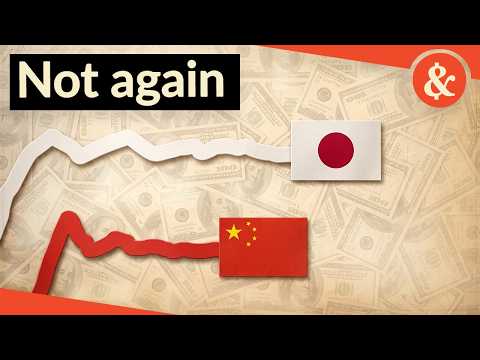
A video examining the economics of anti-intellectualism, structured in four parts covering experts, knowledge and markets, "DEIntellectuals," and common sense.
Keen and Dobby argue that fear and greed operate asymmetrically in modern economies: the wealthy can be greedy thanks to buffers and bailouts, while the working class lives in fear, a divide deepened by rising private debt that has shifted income…
Canada is cutting its reliance on the U.S. through rising non‑U.S. exports and infrastructure projects, but structural challenges and lingering public distrust keep full decoupling difficult.
AI-driven automation has coincided with a loss of 200k+ creative jobs in the U.S., especially in film, TV and publishing. Historical tech shifts (internet, streaming) reshaped business models, and AI may force similar upheaval, though unexpected positives like TikTok‑driven book sales could arise.

 7:33