1:06:56
Brilliant Pebbles: Shooting a Ballistic Missile with a Hypervelocity Bullet
WatchAlexander the ok
A video on the Brilliant Pebbles concept for intercepting ballistic missiles with hypervelocity projectiles.
Watch on YouTube PodPulse
Curated sources for Science explainers in Explainers & Documentary, with summaries of their latest episodes.
6 curated podcasts11 curated YouTube channels1 curated newsletter1:06:56WatchAlexander the ok
A video on the Brilliant Pebbles concept for intercepting ballistic missiles with hypervelocity projectiles.
Watch on YouTube 15:06
Also indexed: 132 sourcesIndexed sources are summarized but not yet reviewed for Explore.
WatchSciShow
The video discusses how geologists attribute various features of Earth to a collision with a Mars-sized protoplanet called Theia around 4.5 billion years ago.
 10:29
WatchNOVA PBS Official
The video explores the prehistoric artwork of Chauvet Cave, featuring Paleolithic paintings created around 37,000 years ago.
Watch on YouTube
 1:33:57
WatchNew Scientist
A livestream exploring whether AI could become conscious, featuring mathematicians, physicists and philosophers discussing the nature of consciousness and machine intelligence.
Watch on YouTube
Listen50 minThe Rest Is Science
Hannah Fry shows Michael Stevens a 2,000-year-old Roman lead sling bullet, sparking a dive into neutrino-shielding physics, Greenland ice-core pollution, CAPTCHAs, and contronyms.
ListenScience explainersHistory of science & technology
Engineer turned data scientist. I make videos about things that generally interest me. I do not use any generative AI to make any part of my videos. I use the following tools for video creation: OS: Linux Mint Editing: DaVinci Resolve Animation: Blender Audio: Audacity Image edi…
1:06:56Watch
A video on the Brilliant Pebbles concept for intercepting ballistic missiles with hypervelocity projectiles.
Watch on YouTube 1:14:56
Watch
A video essay about the game System Shock, covering its background, design, and influence on later games.
Watch on YouTubeSciShow explores the unexpected. We delve into the scientific subjects that defy our expectations and make us even more curious! For more from SciShow, check out SciShow Kids and SciShow Tangents, along with SciShow Space and Psych.
Blowing your mind since 1974. NOVA is the most-watched primetime science series on television reaching an average of five million viewers weekly. The NOVA website has been pioneering new forms of web-original content since it debuted in early 1996. NOVA's online presence amplifi…
Radiolab is on a curiosity bender. We ask deep questions and use investigative journalism to get the answers. A given episode might whirl you through science, legal history, and into the home of someone halfway across the world. The show is known for innovative sound design, sma…
Listen51 min
If someone in the world has a good idea, you'll find it here. We're the world's number one science and technology magazine, and online we are the go-to site for breaking news, exclusive content and breakthroughs that will change your world. New Scientist: exploring the fruits of…
Join mathematician Professor Hannah Fry and science creator Michael Stevens (Vsauce) as they dig into the weird scientific questions that often go unexplored. Welcome to The Rest Is Science, a show that sits in the fascinating space between what we think we know, and what we act…
From the evolution of intelligent life, to the mysteries of consciousness; from the threat of the climate crisis to the search for dark matter, The world, the universe and us is your essential weekly dose of science and wonder in an uncertain world. Hosted by journalists Dr Rowa…
The latest videos from Science magazine, the world's leading outlet for scientific news, commentary, and cutting-edge research. Learn more at www.science.org.
Volcanoes. Trees. Drunk butterflies. Mars missions. Slug sex. Death. Beauty standards. Anxiety busters. Beer science. Bee drama. Take away a pocket full of science knowledge and charming, bizarre stories about what fuels these professional -ologists' obsessions. Humorist and sci…
TED-Ed’s mission is to create lessons worth sharing. Feed and expand your curiosity with our award-winning animated shorts - published on YouTube and available with supplemental learning materials on ed.ted.com. Want to suggest an idea for a TED-Ed animation, nominate an educato…
Unexplainable takes listeners right up to the edge of what we know…and then keeps on going. The Unexplainable team — Noam Hassenfeld, Julia Longoria, Byrd Pinkerton, and Meradith Hoddinott — tackles scientific mysteries, unanswered questions, and everything we learn diving into…
A weekly programme that illuminates the mysteries and challenges the controversies behind the science that's changing our world.
Listen26 min
SpaceX's first catch of an orbital Starship edges rockets toward rapid reusability; the Arecibo message and Drake equation frame the search for alien life; and a SARS-CoV-2 enzyme is shown to directly trigger sneezing nerves.

Read
A Johns Hopkins study using MRI and PET scans from longitudinal cohorts suggests Alzheimer’s can be detected before cognitive symptoms appear, offering hope for earlier intervention.
We give you deep answers to simple questions about science and the rest of the universe. And also dad jokes. Be Smart is hosted by Joe Hanson, PhD. He's a molecular biologist and an award-winning science communicator and journalist Have ideas or questions? Visit our website to g…
Animation videos explaining things with optimistic nihilism since 12,013. We’re a team of illustrators, animators, number crunchers and one dog who aim to spark curiosity about science and the world we live in. To us nothing is boring if you tell a good story. For updates on our…
 6:31
Watch
Nessa Carey discusses how early career scientists can approach conference networking as a practiced professional skill.
No recent summaries yet.
The video discusses how geologists attribute various features of Earth to a collision with a Mars-sized protoplanet called Theia around 4.5 billion years ago.
 14:44
Watch
SciShow examines whether historical figures like Da Vinci and Dalí really slept only 2 hours a day in six 20-minute naps, and what science says about such sleep regimens.
Watch on YouTubeThe video explores the prehistoric artwork of Chauvet Cave, featuring Paleolithic paintings created around 37,000 years ago.
 6:13
Watch
The video explores the butterfly effect thought experiment and how tiny changes in physics can lead to massive, unpredictable consequences.
Watch on YouTubeA search for perfect moments: a polar trekker's candy-cache joy, Charles Bliss's universal symbol language and its bitter lawsuit, and the hunt for a perfect snowflake that physics says can't exist.
Listen39 min
A producer investigates the frightening agitation his father showed while dying, uncovering terminal delirium — common yet little understood — and neuroscience hinting the dissolving self may spare the dying from suffering.
ListenA livestream exploring whether AI could become conscious, featuring mathematicians, physicists and philosophers discussing the nature of consciousness and machine intelligence.
 1:00:58
Watch
Experimental particle physicist Harry Cliff discusses the Standard Model of particle physics, its limitations, and the search for new physics beyond it.
Watch on YouTubeHannah Fry shows Michael Stevens a 2,000-year-old Roman lead sling bullet, sparking a dive into neutrino-shielding physics, Greenland ice-core pollution, CAPTCHAs, and contronyms.
Listen46 min
Ancient peoples blamed toothache on a divine 'toothworm'; science showed mouth bacteria produce acid that dissolves enamel, and fluoride — found via Colorado's brown-stained, decay-proof teeth — rebuilds stronger, acid-resistant enamel.
ListenBen Stiller and Robert De Niro answer the web's most searched questions about themselves in a WIRED Autocomplete Interview.
 30:41
Watch
Food historian Ken Albala joins WIRED to answer internet questions about the history of food, covering myths, recipes, and culinary traditions.
Watch on YouTubeAI reportedly proves the 167-year-old Riemann hypothesis via a six-week human-Claude collaboration, yielding 17 million lines of Lean code no human fully understands, leaving mathematicians awed, divided and wary.

Listen21 min
Science journalists revisit their weirdest stories—hand-sniffing after handshakes, gut auto-brewery, the orgasmetron, stone-using macaques, head transplants, driving rats, and a transient anus—showing odd research can reveal real science.
ListenPaleontologist Narimane Chatar explains how the evolutionary trade-off between slicing and crushing teeth has favored specialists over generalists in mammals.
Lichenologist Manuela Delforno explains lichens as fungus-algae symbioses — now seen as mini-ecosystems with a hidden third yeast partner — that can't be lab-grown, track air pollution, survive space, and need protection.

Listen1 h 17 min
A Yale stress physiologist explains how cortisol and norepinephrine carry stress from brain to body, why chronic stress and alcohol hijack the system, and how noticing, exercise, sleep and social support rebuild resilience.
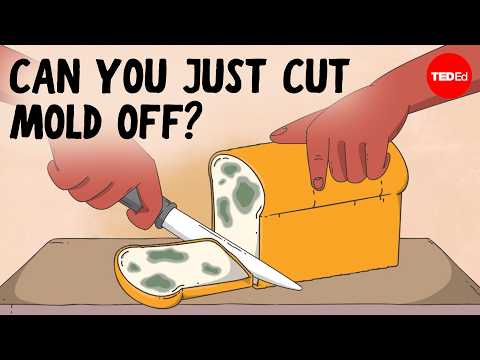
ListenTED-Ed lesson by Josephine Wee exploring how mold spores form, the difference between harmful and helpful molds, and what happens if you eat moldy food.
 6:16
Watch
A look at five scientists who experimented on themselves, and how their bold self-experimentation led to breakthroughs in medicine.
Watch on YouTubeA New Yorker columnist argues seat reclining has no rule-based answer because airlines 'sold the space twice'; comfort research shows seat width matters more than legroom, and the dispute is a flashpoint for broader air-travel frustration.
Listen45 min
Ann Druyan recalls creating the Voyager Golden Record with Carl Sagan in 1977 — a billion-year message of Earth's sounds, images, and music — and the 15-second phone-call proposal that made the project their love story.
ListenListen26 min
China's emissions appear to have plateaued as clean energy covers all its new demand, a bird flu study finds most affected bird populations recover, and an AI-human romance probes synthetic love.
ListenRead
A study of 50 near‑death experiencers found four recurring geometric spaces—cones, arches, curves, and egg‑like interiors—mirroring common tunnel‑and‑light visuals, highlighting a structured visual pattern in NDEs.
ReadThe creator explores how lift works after flying with the U.S. Navy Blue Angels and building a wind tunnel to test common myths about flight.
 42:43
Watch
The video examines the environmental impact of AI, including electricity use, carbon emissions, water consumption, and the effects of data centers on local communities.
Watch on YouTubeThe video explains what happens to the body after death, focusing on surviving cells and a process that can continue for weeks.
 17:31
Watch
The video explores humanity’s first civilization using DNA sequencing, dating ancient detritus, mathematical models, and aerial and lidar archaeology.
Watch on YouTube 6:18
Watch
Caroline Dunne gives early career researchers advice on getting the most from conference networking sessions.
Watch on YouTube