Standard CFA models of major personality inventories fit poorly; the review advocates a theory‑driven, flexible CFA approach (E‑CFA) and urges researchers to replace weak EFA models with robust CFA or abandon them.
Psychologist Andrea Hussong explains that children's gratitude grows through notice-think-feel-do moments, that parents should model the process out loud, and that calm follow-up beats punishment when kids act ungrateful.
The author uses an ant‑vs‑human obstacle experiment as a metaphor for writing, contrasting unproductive rumination (bad nuts) with productive trial‑and‑error (good nuts) that leads to finished work.
BrainCraft's Dr. Vanessa Hill walks through three sleep studies that changed her views, covering evening lighting, sleep regularity, and the blue light myth.
The Vancouver Art Gallery’s partnership with PaRx lets health providers prescribe free gallery visits and guided nature activities, using art to reduce isolation, stress and promote community‑based healing.
Music psychologist Lisa Margulis shows music's meaning is built in the listener's mind through memory, prediction and culture, while Daisy Fancourt explains how arts participation, not artistic skill, delivers measurable health benefits.
Standard CFA models of major personality inventories fit poorly; the review advocates a theory‑driven, flexible CFA approach (E‑CFA) and urges researchers to replace weak EFA models with robust CFA or abandon them.
Psychology's experimental and correlational traditions face replication and theoretical gaps; advancing requires rigorous construct validation and clear, theory‑based definitions of personality constructs.
"Speaking of Psychology" is an audio podcast series highlighting some of the latest, most important and relevant psychological research being conducted today. Produced by the American Psychological Association, these podcasts will help listeners apply the science of psychology t…
Hi! I'm Dr Vanessa Hill, a sleep researcher and science communicator. On BrainCraft I explore psychology, neuroscience and self-development to bridge the gap between scientific research and your daily well-being. Outside of my regular videos, you can find BrainCraft as a series…
The Vancouver Art Gallery’s partnership with PaRx lets health providers prescribe free gallery visits and guided nature activities, using art to reduce isolation, stress and promote community‑based healing.
Why do I feel stuck? How can I become more creative? What can I do to improve my relationships? If you’ve ever asked yourself these questions, you’re not alone. On Hidden Brain, we help you understand your own mind — and the minds of the people around you. (We're routinely rated…
This podcast is a channel on the New Books Network. The New Books Network is an academic audio library dedicated to public education. In each episode you will hear scholars discuss their recently published research with another expert in their field. Discover our 150+ channels a…
We create cartoons that explain complicated ideas in simple language. Join us as a Youtube member for special perks: https://www.youtube.com/channel/UC-RKpEc4eE9PwJaupN91xYQ/join
Your guide to a conceptual and intelligent Jiu-Jitsu approach. BJJ black belt Steve Kwan and a slate of expert guests explain the concepts, strategies, and tactics behind the gentle art of Brazilian Jiu-Jitsu.
Psychologist Andrea Hussong explains that children's gratitude grows through notice-think-feel-do moments, that parents should model the process out loud, and that calm follow-up beats punishment when kids act ungrateful.
Scams exploit human psychology—emotional distress, trust, life transitions—not gullibility alone; AI and smartphones industrialize fraud, and the best defense is a trusted third party plus structural fixes like bank holds and platform liability.
The author uses an ant‑vs‑human obstacle experiment as a metaphor for writing, contrasting unproductive rumination (bad nuts) with productive trial‑and‑error (good nuts) that leads to finished work.
Large‑scale social programs often fail to deliver impact, a pattern driven by overconfidence and insufficient evaluation, urging humility and rigorous evidence before scaling interventions.
BrainCraft's Dr. Vanessa Hill walks through three sleep studies that changed her views, covering evening lighting, sleep regularity, and the blue light myth.
Research reveals weak evidence for billion-dollar sleep noise aids. Reviews find no convincing proof they help adults; a 2026 study shows pink noise reduces REM and worsens sleep with noise. Earplugs outperform machines. Needs beat marketing claims.
Sharing oral histories builds empathy, preserves community legacy, and boosts seniors' mental health, making storytelling a vital, democratic tool for personal and societal connection.
Music psychologist Lisa Margulis shows music's meaning is built in the listener's mind through memory, prediction and culture, while Daisy Fancourt explains how arts participation, not artistic skill, delivers measurable health benefits.
Research on the underdog effect shows doubt from low-credibility sources can fuel performance, while reframing your life as a hero's journey turns adversity into meaning and motivation.
Harvard's Alexis Redding argues colleges should temper the mental-health 'crisis' narrative by separating clinical emergencies from normal transition struggles, using tools like the W curve, warm handoffs, and clear extension policies.
Sociologist and Buddhist practitioner James Coleman traces Tara from ancient feminine spirituality to her role as a Buddha, arguing she is an archetype of inner energies whose reintegration can rebalance a crisis-prone, hyper-masculine culture.
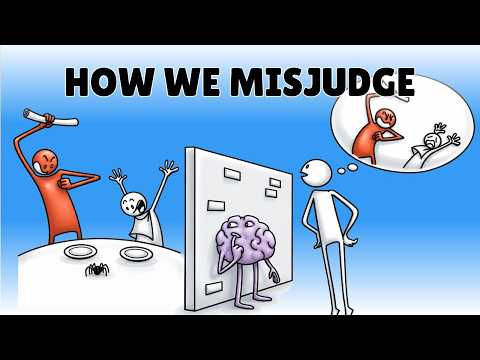
The video explains the fundamental attribution error, a cognitive bias that leads people to overestimate personality and underestimate situational factors when judging others.
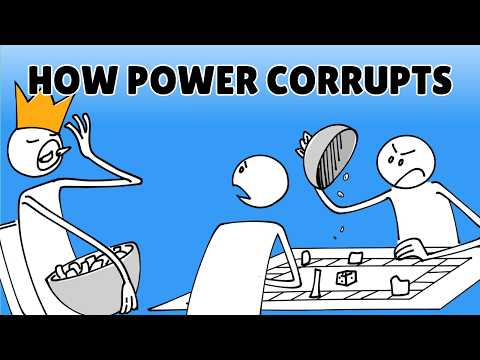
The video explores how a rigged Monopoly experiment illustrates the psychology of power, including status, entitlement, empathy, distrust, morality, the brain, and preventing abuse.
Pursuing professional jiu-jitsu sustainably requires abandoning reliance on competition winnings and instead adopting diversified income streams, intentional training schedules, and proactive self-promotion to avoid financial ruin and burnout.
Steve Kwan explains the protege effect: studying as if you will teach something improves your own learning, even if you never actually teach it. Applied to jiu-jitsu, teaching forces practitioners to question ingrained habits and move beyond…