5:35
The Diamond Market is Collapsing. Here's Why
WatchSabine Hossenfelder
The video explains why the diamond market is collapsing, attributing the decline to science rather than fashion or the economy.
Watch on YouTube PodPulse
Curated sources for Fundamental physics in Physics, Space & Chemistry, with summaries of their latest episodes.
4 curated podcasts13 curated YouTube channels1 curated newsletter5:35WatchSabine Hossenfelder
The video explains why the diamond market is collapsing, attributing the decline to science rather than fashion or the economy.
Watch on YouTube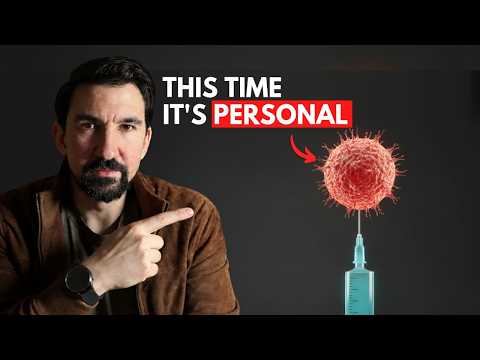 17:03
Also indexed: 68 YouTube channelsIndexed sources are summarized but not yet reviewed for Explore.
WatchDr Ben Miles
Dr Ben Miles explains the molecular biology behind Merck and Moderna's personalized mRNA cancer vaccine for melanoma and reviews its phase 3 trial results.
 19:26
WatchSixty Symbols
Ed Copeland discusses a detection that has some scientists asking whether a dark matter particle has been observed, referencing the LUX-ZEPLIN (LZ) experiment.
Watch on YouTube 38:29
WatchPhysics Explained
The video explores which of π, e, √2, or the golden ratio is the deepest number in mathematics, using continued fractions and the Fibonacci sequence.
Watch on YouTube 9:18
WatchFermilab
Fermilab's Don Lincoln explains what nuclear fusion is, why it is interesting, and why it has remained difficult to tame for peaceful energy production.
Watch on YouTube 6:54
WatchThe Science Asylum
A video discussing five common misunderstandings of quantum physics terminology, covering particle, wave, measurement, spin, and orbital concepts.
Watch on YouTubeAs simple as possible, but not any simpler! Science and technology updates and summaries. No hype, no spin, no tip-toeing around inconvenient truths. Currently 5 videos a week (Tue-Wed-Thu and Sat-Sun). Early access for channel members. Sabine Hossenfelder has a PhD in physics.…
5:35Watch
The video explains why the diamond market is collapsing, attributing the decline to science rather than fashion or the economy.
Watch on YouTube 6:57
Watch
A look at the trend of people outside academia using AI to write physics papers and what it could mean for science.
Watch on YouTubeDr Ben | Physicist | Entrepreneur | Investor | YouTuber If you'd like to get in touch, you can send me a message at the email address below. https://linktr.ee/drbenmiles
Physics Explained is a channel that explores advanced topics in physics without skimping on the mathematical detail. There is a growing community of independent learners who are keen to explore modern ideas in physics with the aid of mathematical reasoning. This channel aims to…
Fermi National Accelerator Laboratory is America's particle physics and accelerator lab. Founded as the National Accelerator Laboratory in 1967, it was renamed after physicist Enrico Fermi in 1974. Since its inception, Fermilab has been a world leader in particle physics, with d…
At the Science Asylum, Nick Lucid is absurdly excited about science and math. We hope that you feel safe to be excited about it too. Crazy = Very enthusiastic, passionate, fanatical, excited, and/or obsessed. Asylum = Haven, refuge, sanctuary, shelter, and/or safe house.
Explainers and breakthroughs from the frontiers of math and fundamental science. Quanta Magazine is an award-winning, editorially independent publication of the Simons Foundation. http://www.quantamagazine.org/ For more information, contact video@quantamagazine.org #science #com…
Simply put: cool physics and other sweet science. "If you can't explain it simply, you don't understand it well enough." ~Rutherford via Einstein? (wikiquote) Created by Henry Reich
Perimeter Institute is a world-leading center for theoretical physics, dedicated to unraveling the deepest mysteries of the universe. Through groundbreaking research, innovative training programs, and inspiring outreach initiatives, we bring together brilliant minds from around…
#CERN is the European laboratory for particle physics, home to the Large Hadron Collider. Here, scientists study the fundamental particles that make up the world around us, working to find out what the Universe is made of and how it works. The world's largest and most complex sc…
 1:01:52
Watch
Angela Collier examines Trader Joe's employees' distinctive customer service behaviors and explores why they act that way.
Where do we come from ? In what world do we live ? In a few minutes, discover and understand the most complex scientific theories, to get a grasp of the cosmos. Precise and short videos, with visual explanations, in a simple and accessible format ! The videos on this channel are…
I plan on uploading content about science, technology, history and comedy. Then again, as Dwight D. Eisenhower said: "Plans are worthless, but planning is everything"
No recent summaries yet.
Dr Ben Miles explains the molecular biology behind Merck and Moderna's personalized mRNA cancer vaccine for melanoma and reviews its phase 3 trial results.
 28:27
Watch
Dr Ben Miles visits Copenhagen Atomics to examine its thorium reactor plans, fuel breeding, materials, costs, safety, waste, and Denmark’s test reactor.
Watch on YouTubeEd Copeland discusses a detection that has some scientists asking whether a dark matter particle has been observed, referencing the LUX-ZEPLIN (LZ) experiment.
 9:41
Watch
Dr Emma Chapman discusses the observation of an aurora on an exoplanet orbiting the star Beta Pictoris, 63 million light-years away.
Watch on YouTubeThe video explores which of π, e, √2, or the golden ratio is the deepest number in mathematics, using continued fractions and the Fibonacci sequence.
 51:42
Watch
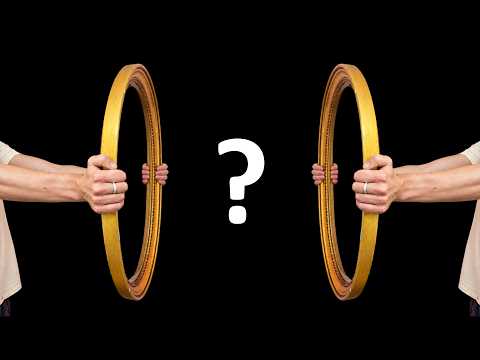
The video explores the Casimir effect, in which two mirrors in a perfect vacuum attract each other due to quantum field theory, as first predicted by Hendrik Casimir in 1948.
Watch on YouTubeFermilab's Don Lincoln explains what nuclear fusion is, why it is interesting, and why it has remained difficult to tame for peaceful energy production.
 3:36
Watch
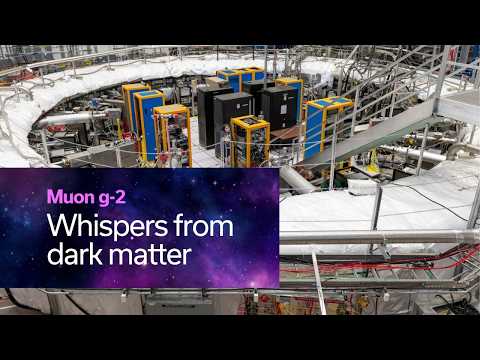
The video covers Fermilab's Muon g-2 experiment and how its precision enables searches for faint signals from dark matter interacting with muons.
Watch on YouTubeA video discussing five common misunderstandings of quantum physics terminology, covering particle, wave, measurement, spin, and orbital concepts.
 5:40
Watch
The video covers five facts about photons, including photon mass, the speed of light, momentum and energy, and the time dimension.
Watch on YouTubeShep Doeleman explains how the Event Horizon Telescope captured black hole images and how movies of black holes may be possible by the early 2030s.
 55:06
Watch
Evolutionary biologist Toby Kiers explains how fungal networks trade nutrients with plants, help keep carbon underground, and behave strategically without brains.
Watch on YouTubeA short film tracing the history of theories of vision, from Plato's "visual fire" idea to Ibn al-Haytham and Kepler's contributions to modern optics.
 12:45
Watch
The video examines evidence for dark matter and theories of what it might be, including WIMPs, axions, MACHOs and modified gravity.
Watch on YouTubeMarcela Carena’s public lecture explores dark matter, the Higgs, neutrinos, gravitational waves, and a tiny imbalance between matter and antimatter.
 1:00:59
Watch
A CBC Radio IDEAS recording featuring Perimeter Institute researcher Asimina Arvanitaki discussing curiosity in science with host Nahlah Ayed.
Watch on YouTubeThe video explains how LHC beams are structured and focused, what determines the collision rate, and the challenges and goals of increasing luminosity with HiLumi LHC.
 7:42
Watch
CERN’s second Particle Collisions episode explains luminosity, cross-section, and inverse femtobarns for predicting particles produced in accelerator experiments.
Watch on YouTube 1:01:00
Watch
Angela Collier presents a carbon model she built from scratch using NIST data, alongside a PowerPoint presentation and a segment on Einstein.
Watch on YouTubeBlack holes form when massive stars collapse under extreme spacetime curvature. From outside, the collapsing star appears to freeze and darken at the event horizon. Its shadow consists of flattened images of captured objects seemingly stuck forever at the boundary.
 4:58
Watch
Waves transfer energy without moving matter. The episode uses a rope analogy to explain wave propagation. It covers reflection, interference, and differences between mechanical, electromagnetic, and gravitational waves.
Watch on YouTube